
821 S Main St, DeForest, Wisconsin 53532

Inside Dental Implant Surgery: 7 Steps to Your New Smile
DeForest, WI


Dental implants are an incredible option for restoring missing teeth, providing functional and aesthetic benefits. If you’re considering dental implants, understanding the surgery process can help you feel more confident about the journey. This guide breaks down the seven essential steps of dental implant surgery, giving you a clear picture of what to expect before, during, and after the procedure. Whether you’re looking for a permanent solution to missing teeth or want to restore your smile, these steps will guide you toward a new, healthy smile.
1. Initial Consultation and Assessment
Before the surgery, you’ll have an initial consultation with your dentist. During this appointment, your dental professional will examine your mouth and discuss your medical history. Expect a thorough evaluation, including X-rays or 3D scans, to determine if dental implants suit you. Your dentist will also review any pre-surgery instructions and address any concerns you may have. This is the time to ask about your implant options and the entire process.
2. Creating a Personalized Treatment Plan
Once it’s confirmed that dental implants are right for you, the next step is creating a personalized treatment plan. Every patient’s needs are unique, and your dentist will design a plan tailored specifically to your dental and medical needs. This plan considers factors such as the number of implants required, the type of implant best suited for you, and the condition of your jawbone. Your dentist will also discuss the expected recovery timeline and any additional treatments that may be necessary, like bone grafting.
3. Placement of the Dental Implant
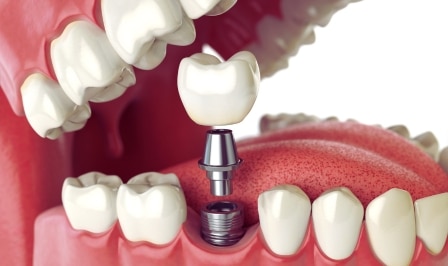
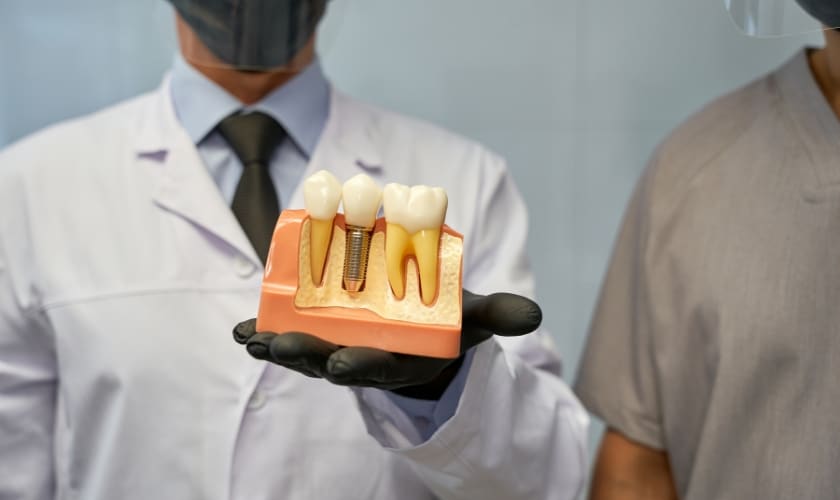
The next step in the process is the actual surgery. The dental implant, a small titanium post, is surgically placed into your jawbone during this stage. This procedure is performed under local anesthesia or sedation to ensure comfort. The implant will act as a replacement root for your missing tooth. The surgery usually lasts between one and two hours, depending on the complexity of the procedure and the number of implants needed.
4. Healing and Osseointegration
After the implant is placed, the healing process begins. The implant will fuse with your jawbone through a process known as osseointegration. This process can take several months (usually 3-6 months) but is critical for the long-term success of your dental implants. During this time, the titanium implant becomes a permanent part of your jawbone, providing a stable foundation for the final tooth restoration. Following your dentist’s post-operative care instructions is essential to ensure proper healing.
5. Placement of the Abutment
Once the implant has fully integrated into the bone, you’ll return to your dentist to have the abutment placed. The abutment is a small connector piece that attaches the implant to the artificial tooth. During this procedure, your dentist will make a small incision in the gum to expose the implant. The abutment is then screwed into place, and the gums are closed around it. This procedure is minimally invasive, and most patients experience little to no discomfort afterward.
6. Final Restoration: Attaching the Crown
After the abutment is in place, the next step is attaching the final restoration, typically a dental crown, to the implant. Your dentist will take impressions of your mouth to ensure the crown fits perfectly. The crown is custom-made to match your natural teeth’ size, shape, and color, ensuring it blends seamlessly into your smile. Once the crown is ready, your dentist will securely attach it to the abutment, completing your dental implant.
7. Post-Surgery Care and Follow-Up
After the dental implant procedure, proper aftercare is crucial for a smooth recovery. Your dentist will schedule follow-up appointments to monitor your progress and ensure everything is healing as expected. You must maintain good oral hygiene and avoid chewing on hard foods to protect your new implants. Over time, with proper care, dental implants can last a lifetime, providing you with a reliable and natural-looking solution for missing teeth.
Benefits of Dental Implants
Dental implants offer numerous benefits compared to traditional dentures and bridges. Some of the key advantages include:
- Durability: Dental implants can last 15 to 20 years with proper care.
- Improved Functionality: Implants restore full chewing power, allowing you to eat and speak confidently.
- Natural Appearance: Implants are custom-made to match the look of your natural teeth.
- Bone Preservation: Implants help maintain jawbone structure by preventing bone loss.
Is Dental Implant Surgery Right for You?
Dental implant surgery is an excellent option for many people, but there are better choices for everyone. To be a good candidate, you must have healthy gums and enough bone density to support the implant. If you’re missing a significant amount of bone, you may need additional procedures, like bone grafting, to prepare your jaw for the implant. Your dentist will evaluate your needs and help determine whether dental implants are the best solution for your smile.
Dental implant surgery is a transformative process that restores both function and aesthetics to your smile. You can confidently approach the procedure by understanding each step—from consultation to the final restoration. If you’re ready to explore the benefits of dental implants and want to know more about the process, contact our team today. We’re here to help you achieve the smile you’ve always wanted!